
What the symptom can suggest
No dashboard power may point to a discharged battery or poor connection. A single click may involve battery voltage, cables, control or starter operation. A running engine with a charging warning can indicate a charging-system fault, but measurements are needed.
Why jump-start results are limited
If a jump start works, the battery was unable to provide sufficient power at that moment; it does not explain whether the battery is worn, discharged by vehicle use, affected by a connection problem or drained by another circuit.
A complete basic test
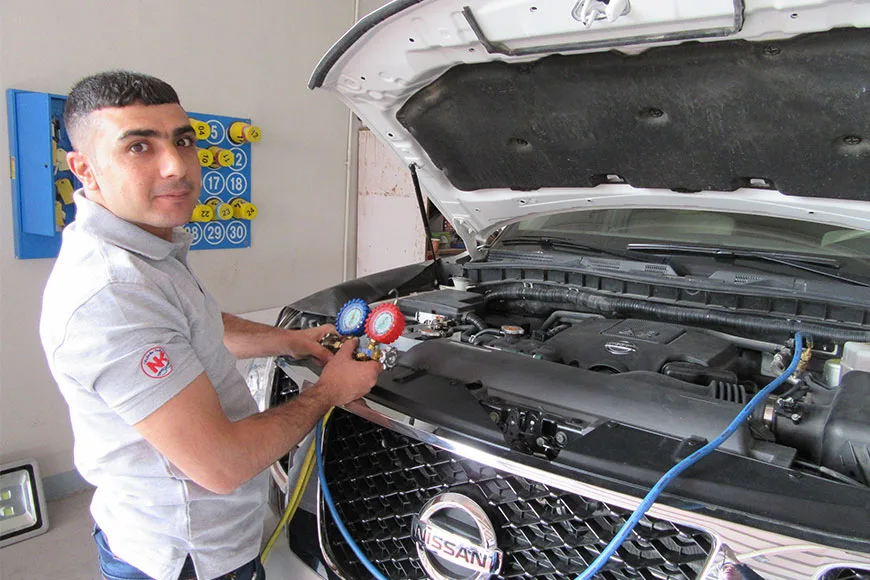
Diagnosis may include visual terminal checks, battery state and capacity testing, voltage-drop checks during cranking, starter current behaviour and alternator output under relevant loads. Intermittent drains may require a controlled parasitic-current test.
Safety around batteries
Batteries can release gas and deliver very high current. Follow the manufacturer jump-start procedure, keep ignition sources away and stop if the battery is damaged, leaking, swollen or frozen.
Information to bring
Tell the workshop the battery age if known, how long the vehicle was parked, whether accessories were added and what happened after charging or jump starting.
Connections can imitate component failure
Loose, corroded or damaged terminals and grounds can restrict current even when a battery tests well at rest. Voltage-drop testing under load is more informative than judging a connection by appearance alone. Repeated jump starting can also disturb connections or introduce voltage spikes if performed incorrectly.
Do not disconnect the battery while the engine is running as a home alternator test. That old method can damage electronics and does not provide a controlled measurement.
Starter-system clues
A click without cranking may involve control voltage, a relay, cable resistance, starter engagement or engine mechanical resistance. Rapid clicking often accompanies low available voltage, but the reason for that low voltage still needs confirmation.
A no-crank fault that changes with selector position or key may point the test plan toward interlocks or control inputs. Tell the workshop exactly what the lamps and sounds do when the start request is made.
Charging-system measurements
Alternator output varies with temperature, battery state, electrical load and smart charging strategy. One voltage reading cannot evaluate every system. The technician may compare requested and actual output, ripple, cable loss and behaviour under load using vehicle-appropriate procedures.
A charging fault can overcharge as well as undercharge. Battery swelling, strong odour or abnormal heat requires caution and professional handling.
Preventing a repeat failure
Once the cause is confirmed, discuss driving pattern, parking duration and any always-on accessories. A suitable maintainer may help a rarely used vehicle, but it does not repair a drain or charging fault. Keep the final test results and battery specification for future comparison.
Prepare for a no-start appointment
Record whether the engine cranks, which lights remain on, whether a click is heard and what changed after charging or jump starting. Bring all keys when an immobilizer or key-recognition issue is possible. If the vehicle is stranded in an unsafe place, arrange appropriate roadside help rather than repeatedly attempting to start it until the battery is fully depleted.
When the engine starts but the problem remains
A successful start after charging does not prove the system is healthy. The battery may have recovered enough for one start while lacking reserve capacity, or the charging system may operate only under some temperatures and loads. Observe warning messages and avoid switching the engine off in an unsafe place when charging failure is suspected.
Dim lights, electrical resets, steering warnings or changing blower speed can accompany low voltage, but those symptoms also need measurement. Do not assume every warning represents a separate failed module until supply voltage and grounds have been checked.
Replacement choices and vehicle setup
Battery size, terminal layout, capacity, chemistry and start-stop compatibility matter. Fitting an inappropriate unit can cause poor life, incorrect charging or physical installation problems. Some vehicles require battery registration, adaptation or retained-power procedures; capability should be confirmed for the exact model.
After replacement, ask whether clocks, windows, steering angle, idle learning or other functions need initialization. Confirm that the reason for the original discharge was addressed and that the old battery will be handled through an appropriate recycling route.